
Find Who Owns Richmond Property
Richmond County land carries an identity number. The parcel PIN anchors everything. A street address can change, and a mailing address can point somewhere else entirely, but the PIN keeps the assessor, GIS, deed, and tax trails tied to one tract of land. Each Richmond County system answers one narrow piece of the ownership question, so read them together. The GIS map locates the parcel. The assessment roll names the tax owner of record, while the newest recorded deed names the grantee in the land record itself.
- Search the known site address in the Augusta-Richmond County GIS map. Confirm the polygon and save its PIN.
- Open the official Richmond County Board of Assessors Property Search. Check the owner of record, situs, mailing, and assessment facts that are actually displayed.
- Search the owner as both grantee and grantor in GSCCCA. Read the newest relevant deed and match its legal description to the same parcel.
- If the grantee is an LLC, search the exact entity name in Georgia's business registry. Treat its agent or officer as an entity contact, not as the landowner.
The route leaves a trail anyone can repeat. It does not show who lives at the address. Vacant tracts may lack a 9-1-1 site address, so search by PIN, subdivision, nearby road, or map position instead.
Richmond Ownership Starts With PIN
The Augusta-Richmond County GIS map takes several search types. Owner, site address, PIN, Commission District, subdivision, City Owned, and broad all-field searches all work. Begin with the address you have. Confirm the highlighted polygon against roads and neighboring lots. If a postal address and the GIS map disagree, county help points users to GIS at 706-821-4239 or to address and 911 staff at 706-821-2524.
A parcel can sit inside Hephzibah or Blythe yet remain in Richmond County's assessment and deed systems. Augusta and Richmond consolidated in 1996. Those two cities stayed separate, and that municipal layer matters once ownership research grows into permits or zoning.
Richmond Property Ownership Sources
No single screen proves ownership in Richmond County. Each official source holds one narrow fact. Use it for that, then compare PIN, names, dates, and legal description across the set. The assessor's live site names its result fields in its own words, so confirm labels on the official page rather than assuming them.
| Official source | Ownership clue | Freshness and access |
|---|---|---|
| Board of Assessors | Tax owner of record and parcel context | Annual cycle; official entry is public |
| Superior Court Clerk / GSCCCA | Latest recorded deed, grantee, book/page | Index entry plus gated image or Clerk copy |
| Augusta GIS | Parcel PIN, situs, shape, municipal context | FAQ says GIS updates nightly |
| Georgia SOS eCorp | Entity status, agent and officers | Public entity search, not land-title proof |
Georgia keeps no separate register of deeds here. The Richmond Superior Court Clerk acts as recorder, backed by the GSCCCA statewide index. Need the paper file in person? The Clerk's counter sits at the Judicial Center, 735 James Brown Boulevard, Suite 1500, Augusta. It handles that, at 706-821-2460, real estate option 2.
For assessments, use the official Richmond County assessor landing page.
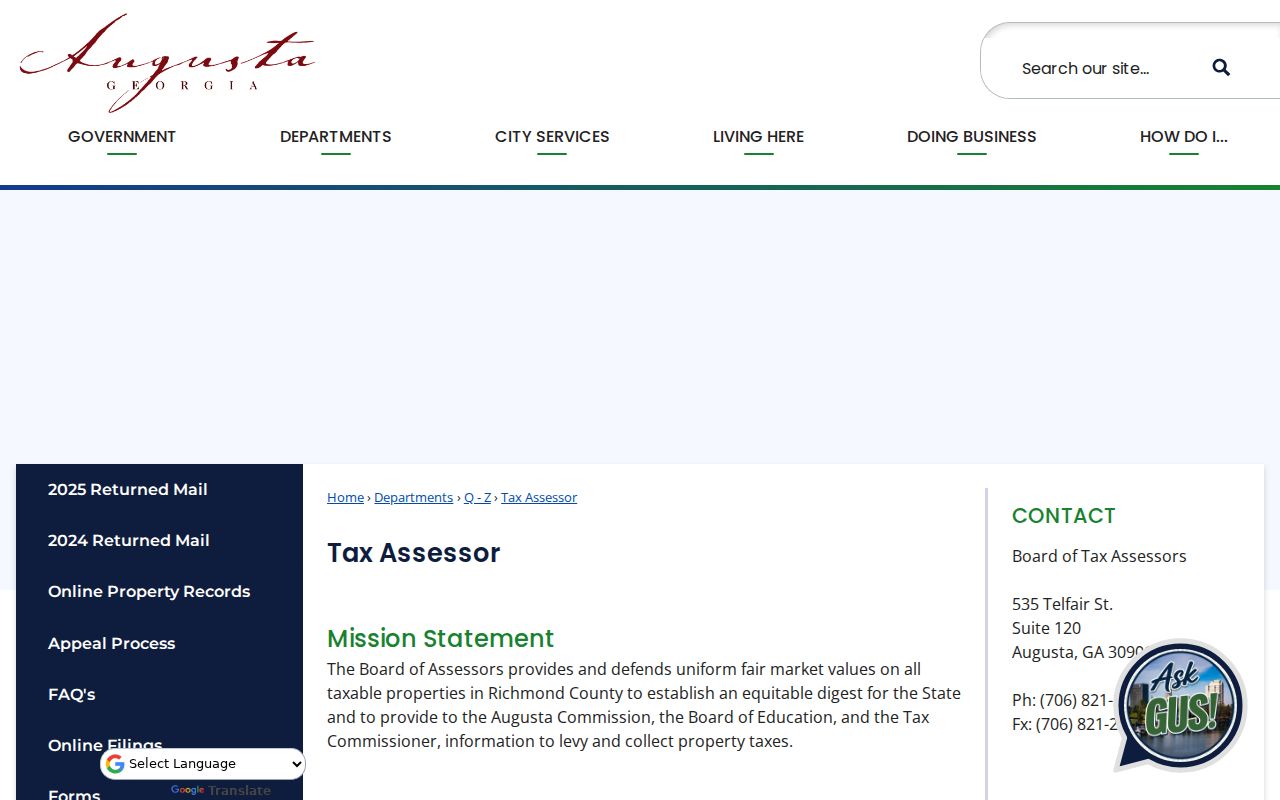
That page is the official government entry point. Continue into the live Property Search and verify its current owner fields before recording any result.
Confirm a Richmond Property Owner
The roll supplies the lead. Confirm it with the GSCCCA real-estate name search. Enter an individual as last name and first name, test middle initials and spelling variants, and run both Grantor and Grantee directions. Entities and trusts need their exact recorded name. Filter toward deeds, and note corrective deeds or estate instruments that explain a change in ownership.
The same GSCCCA search doubles as the deed-index lookup for Richmond County real estate.
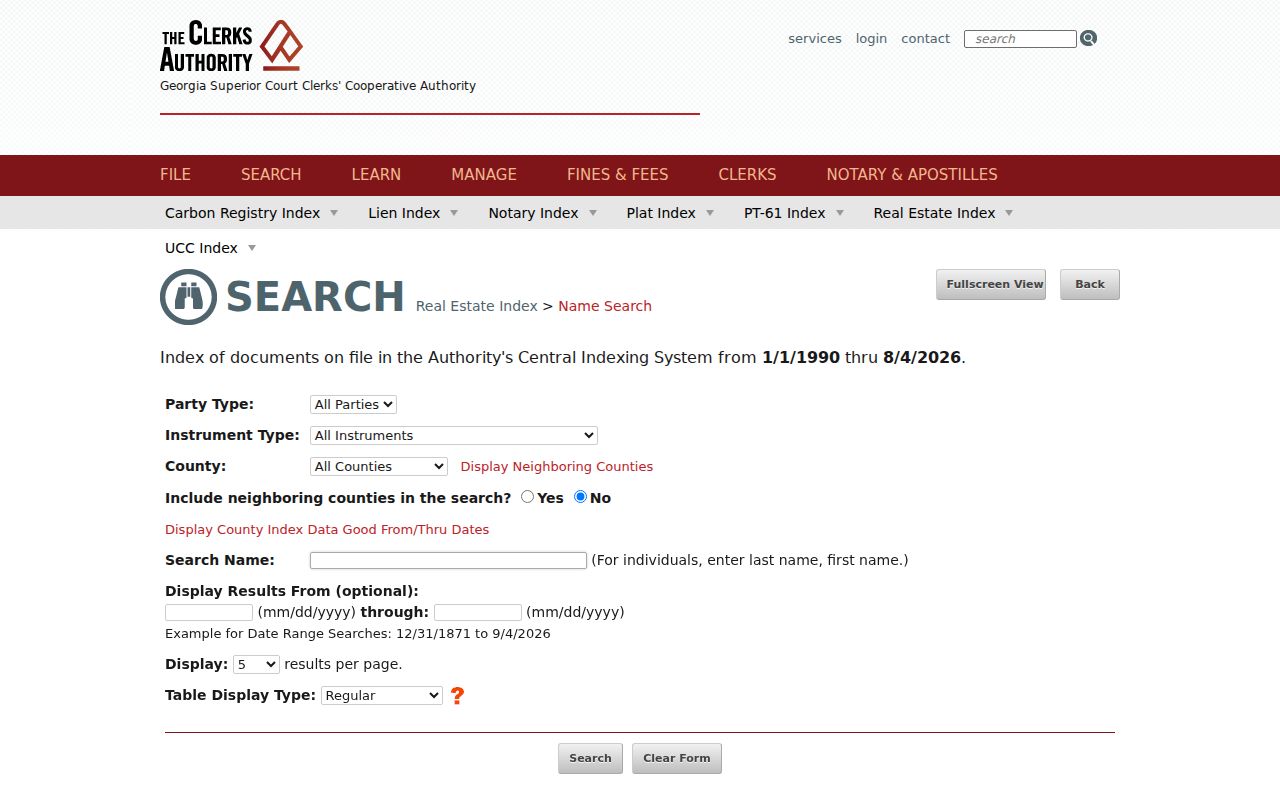
A matching deed is your answer. Save its recording date, instrument type, instrument number, and book/page. Compare the deed's legal description against the parcel and subdivision. Access can be gated. GSCCCA may require an account or payment for full results and images, though free public terminals serve Clerk offices and Richmond also offers an eCertification route. Mail or office requests work when online access fails.
- Owner of record
- The party named for assessment purposes in the current roll.
- Grantee
- The person or entity receiving the interest in a recorded deed.
- Title
- The legal rights in land, which can require more analysis than one name match.
- Situs address
- The property's physical address, distinct from the owner's mailing address.
Richmond Tax Names Can Lag
Tax names can lag in Richmond County. The January 1 owner gets the bill. The Tax Commissioner bills that person even if the property sells later that year, so a tax-bill recipient is only a lead. The assessor roll does change after recording, but no official source gives a fixed number of days, so never promise a precise lag. Check the deed date instead. A purchase deed recorded after the annual assessment and tax cycle can be more current than the bill name. Releases deserve caution too. A later release clears only the instrument it identifies and does not transfer title. See the Richmond County current owner check.
Richmond LLCs Trusts and Estates
The owner of record may not be a person. Richmond deeds name LLCs, trusts, estates, spouse pairs, individuals. Search the exact deed name first. Georgia's eCorp Business Search then shows an entity's filings, registered agent, officers, and status. Those names help interpret the entity, but none becomes the landowner just by appearing in the corporate file.
Estates take extra care. Search instrument types like Deed From Estate, Deed of Gift, Court Order, Power of Attorney, and Revocation. Richmond Probate files may explain who held authority. The county publishes no public Probate search form and no exact copy fee, so contact the Probate clerk or use the official court route, and expect sealed or financial portions to stay withheld.
Richmond Deed Alerts After Search
After a Richmond County search confirms the owner of record, GSCCCA FANS offers a free way to stay watchful. The Filing Activity Notification System alerts a registered name whenever a matching filing occurs. It launched in 2023. A statewide report through June 2024 counted 56,000 users, 118,000 requests, and 125,000 matches. FANS will not block a filing or certify ownership. It simply flags activity early so the instrument itself can be inspected. Georgia's title-theft protections added identity validation. The protections cover title deeds. They also cover other real-estate or personal-property records. They took effect January 1, 2025. A surprise notice deserves a closer look in GSCCCA. It also deserves one with the Richmond Clerk or through a title professional.
Protected Richmond Owner Information
Redactions still appear in public land records. Georgia law shields Social Security numbers, bank and financial data, medical details, the month and day of birth, and certain protected home addresses. VoteSafe can hide a qualifying voter's residence address for voter-registration purposes. It is not a blanket suppression tool for property records. Request only fields that exist publicly. An Open Records request works best when it names the PIN, the situs, and the assessment fields wanted. The Georgia Open Records Act calls for access within three business days when records are readily available. Otherwise the agency must explain the delay. It must estimate availability and cost, and cite any exemption it claims. Match the identifier to the custodian. An assessor request should carry the PIN and situs. A Clerk request needs party names, a date range, instrument type, and any known book/page or instrument number. Permits sometimes show which city handled work at the site. So preserve the GIS municipal-boundary result too. The agency will not answer a broad research question or build a new ownership report. It can produce the existing index, card, filing, or correspondence when the request describes them with care.
Limits of Richmond Ownership Lookups
A lookup for who owns this property can surface the tax-roll name. It can also surface the grantee on a recorded deed. It cannot do everything. The search will not prove the owner lives at the address. It will not settle competing title rights or confirm that no later instrument exists. Same-name owners, parcel splits, trusts, and estate transfers can each leave a quick match incomplete. Protected fields can do the same.
Use records lawfully. Richmond County owner data supports property due diligence, estate work, and civic research. Never use it to stalk, harass, target, or harm a person.
When title matters for a purchase, inheritance, boundary dispute, or lien priority, get certified records and professional title advice. The official paper trail carries far more weight than a loose directory match.